| Weight | 220 g |
|---|---|
| Dimensions | 90 mm |
| Focal Length (mm) | |
| Max Aperture (f) | |
| Aperture Blades | |
| Elements | |
| Rear Mount | |
| Front Thread | |
| Flange-Focal Distance (mm @ ∞) | |
| RF/L Extension (mm) | |
| Production |
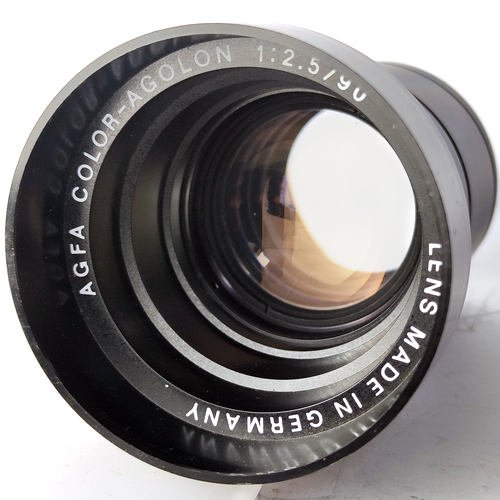
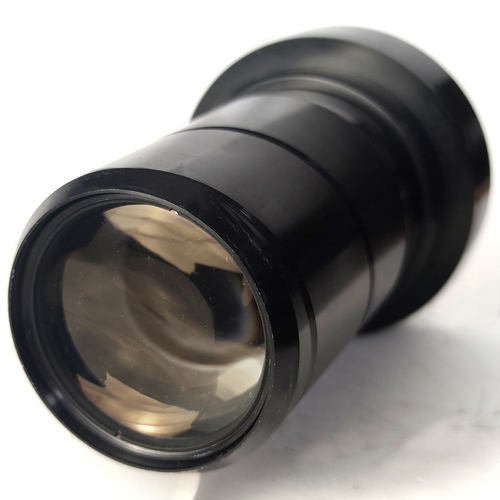







Agfa Color-Agolon 90/2.5
Single coated 35mm slide projector lens fitted to Agfacolor 250 Series (including AV, AVD, S and D models). Metal body. Black plastic nose. Made in Germany. [Cat 4875/100].
Reviews
Related products
-
Agfa Agolon 90/2.5
Compare -

Apollo 90/2.8
Compare -
Agfa Agomar 85/2.8 [V4]
Compare -
Aldis Tele-Projection 250/3.5
Compare -
Benoist Berthiot 125/2.8
Compare -
Aldis Uno 200/4.5
Compare -
Agfa Agomar 60/2.8
Compare -
Braun Color-Autogon 85/2.8
Compare -
Agfa Agolar 85/2.5
Compare -
Argus Projection 100/3.5
Compare -

Agfa Agomar 85/2.5 [V1]
Compare -
Agfa Agomar 70-120/2.8
Compare -
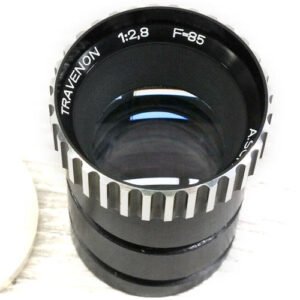
A. Schacht Travenon 85/2.8
Compare -
Bell & Howell Trionar 100/3.5
Compare -

Agfa Agomar 100/2.5 [V2]
Compare -
Pentacon AV 200/4
Compare -
Argus Projection Anastigmat 100/3.3
Compare -
Aldis Anastigmat 152/4
Compare -
Agfa Agomar 90/2.4
Compare -
Bauer Neovaron 80/2.8
Compare -
Aldis Anastigmat 85/2.5 [V1]
Compare -
Appro 100-225/4
Compare -
Agfa Agomar 90/2.8
Compare -
Aldis Projection 100/3.2
Compare -
Agfa Agomar 85-150/4
Compare
16:9 –
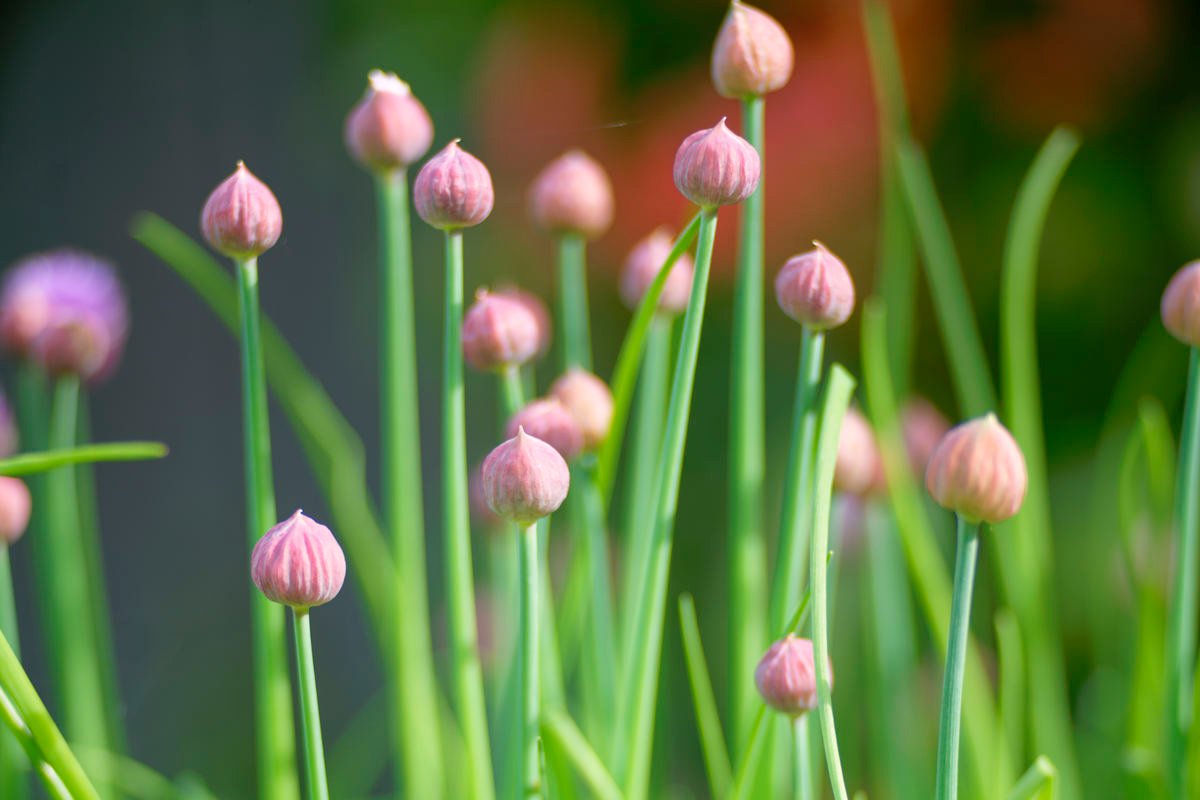
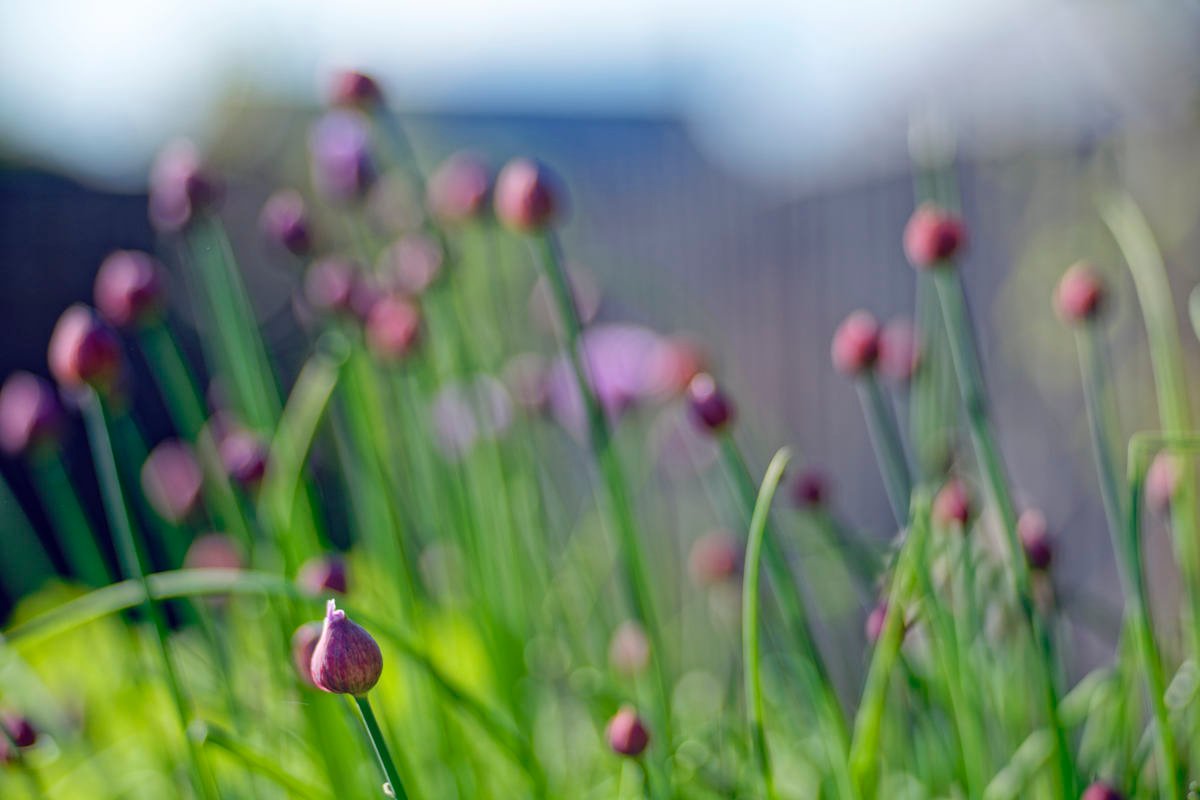
The five-element Color-Agolon 90mm f2.5 belongs to the elite group of fast standard lenses that includes the Leica Colorplans, Docter Doctarlux, Zeiss Super Talon and Agfa/Braun’s f2.4 Agomar. It’s not the sharpest of this group, but its bokeh might be the smoothest. The Color-Agolon delivers sumptuously rendered images that have a special – expensive-looking – character.
Sold (at least) between 1972-1976 in the US and Europe, the hefty Agolon 90/2.5 was the top option for Agfa’s top projector. Separated from the 35mm 250 Series projectors it was designed for, you would guess from the focal length and weight that this is a medium format lens – indeed the image circle is substantially larger than typical optics of this type, accruing three benefits: less mechanical vignetting (bokeh balls remain consistently circular for most of the frame), better full-frame corners, and greater flexibility for use as a tilt and shift lens.